Flower Card Floral Greeting Postcard_7: A Designer's Real-World Review
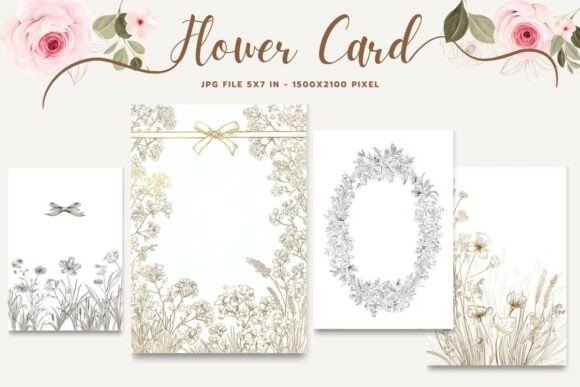
When I first opened the folder for Flower Card Floral Greeting Postcard_7, I wasn't looking at a standard vector file or a complex digitized stitch pattern. I was looking at four high-resolution JPG files that promised to be a digital download only. As an experienced designer who has spent years testing designs for client work and my own craft business, my immediate reaction is one of cautious optimism. This isn't just another clipart image; it is a visual blueprint waiting to be translated into thread. The product falls squarely into the Crafts category with a focus on Graphics, but its true potential lies in how well it translates from a screen to a fabric substrate.
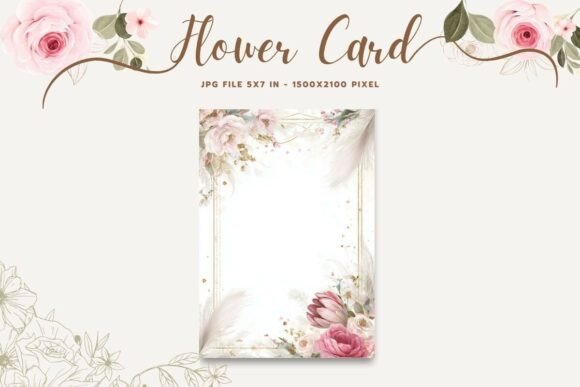
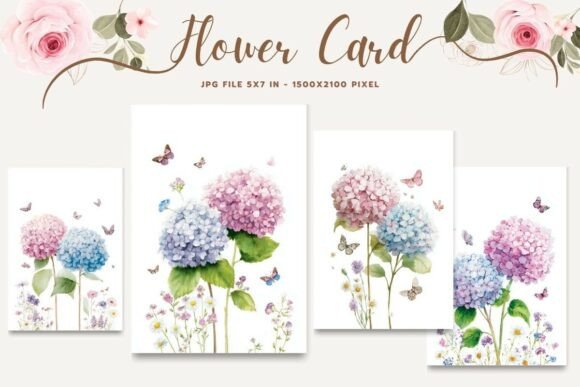
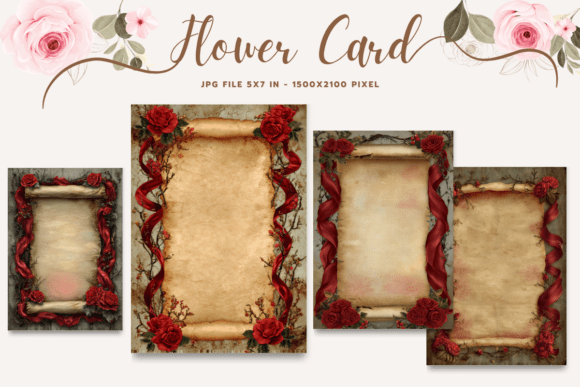
The first impression of Flower Card Floral Greeting Postcard_7 is one of delicate charm. It carries a mood that feels perfectly suited for soft, tactile projects. The layout suggests a central floral motif that could serve as the focal point for a greeting card design, a boutique tote bag, or a personalized nursery item. Because this is provided as a raster image rather than a native embroidery file, the designer's role shifts from "digitizing" to "interpretation." You have to look at the lines and shapes and mentally convert them into satin stitches, fill stitches, and running stitches. The visual personality here is friendly and approachable, making it an excellent candidate for handmade products where emotional connection matters.
Bringing the Design to Life: A Real Project Scenario
Let's walk through a real-life scenario to see how Flower Card Floral Greeting Postcard_7 performs under pressure. Imagine you are an Etsy seller preparing for the holiday season. You have a stack of plain canvas tote bags ready to go, and you want to create a limited run of custom gift bags featuring a spring-like floral theme. You pull up the high-resolution JPG files of Flower Card Floral Greeting Postcard_7 on your computer.
The challenge immediately arises: these are not machine-ready embroidery files. They are graphics. To turn this into a finished product, you would need to use these images as a reference for a manual applique design or trace them into a vector program before converting them to a machine-readable format like .DST or .PES. Alternatively, if you are using a print-and-stitch method, the clarity of the JPG is crucial. If the resolution holds up when you scale it down to fit a small hoop, the crisp edges of the flowers will translate beautifully onto the canvas.
In this scenario, the value of Flower Card Floral Greeting Postcard_7 is in its versatility. Because the listing states you can resize the file to fit the exact size of the substrate, you aren't locked into a specific dimension. Whether you are working on a baby onesie, a large sweatshirt, or a kitchen towel, the ability to adjust the scale without losing the integrity of the image is a massive advantage. However, this freedom comes with responsibility. You must ensure that when you resize the graphic for a tiny cap or a detailed patch, the fine lines don't blur into a muddy mess during the stitching process.
Where This Design Shines in Embroidery Projects
This design asset is particularly strong for projects that require a touch of elegance without overwhelming the garment. For instance, consider a line of aprons for a local bakery. The floral theme of Flower Card Floral Greeting Postcard_7 fits the aesthetic perfectly. When stitched with contrasting thread colors, the design adds a professional polish that elevates a simple cotton apron into a branded uniform. Similarly, for a small shop owner creating wedding gifts, this design works wonders on pillow covers or tea towels. The "greeting postcard" aspect of the name suggests a layout that might include negative space for text, which is ideal for adding names or dates to make the item truly unique.
I also see great potential for commercial embroidery projects involving holiday gifts. The floral motif is timeless, making it suitable for spring weddings, Mother's Day, or even summer bridal showers. When used on apparel decorators' lists, such as custom t-shirts or hoodies, the design offers a softer alternative to bold logos. It appeals to customers who want something that looks handcrafted rather than mass-produced. For hobbyists and makers, the high-resolution nature of the files means you can test various thread color combinations easily by overlaying the JPG on your fabric swatches digitally before cutting a single piece of stabilizer.
Pitfalls and Areas Requiring Careful Consideration
However, no design is perfect for every situation, and Flower Card Floral Greeting Postcard_7 is no exception. Because we are dealing with a raster image intended for resizing, there are specific areas where caution is required. Small hoop sizes present a significant challenge. If you attempt to shrink this design too much for a child's hat or a small embroidered patch, the intricate details of the flowers may become indistinguishable once stitched. Dense stitch areas can lead to puckering if the underlying fabric is thin or stretchy. You must select the right stabilizer to support the weight of the threads.
Texture is another critical factor. On a smooth, tightly woven fabric like poplin, the design will likely render cleanly. But on a textured fabric like linen or a fuzzy fleece, the definition of the flower petals might get lost. Dark fabrics pose their own set of problems; unless you are planning a heavy underlay or using a high-density fill stitch, the design might not pop against a black background. Furthermore, because this is not a pre-digitized file, the stitch density is entirely up to you. If you overfill the area while tracing or digitizing based on the JPG, you risk creating a stiff, uncomfortable finish that customers might reject.
Practical Notes for the Embroidery Designer
If you are planning to use Flower Card Floral Greeting Postcard_7 in your workflow, here are some essential steps to ensure success. First and foremost, always test the design on scrap fabric before committing to your final product. This allows you to check thread color contrast and inspect small details that might get lost in translation. Since you are receiving 4 JPG files, take the time to review stitch density manually if you are digitizing, or carefully align the image if you are doing free-motion work.
Confirm your hoop size early in the process. A design that looks balanced on a screen might feel cramped in a 4x4 hoop. Use proper stabilizer to prevent distortion, especially if you are working on curved surfaces like caps or layered garments. It is also wise to test the design in black and white mockups to ensure the composition works regardless of color. Compare how it looks on light versus dark fabric backgrounds to decide if you need to add a backing or a border to frame the image effectively.
Finally, do not overlook the licensing terms. Before selling finished items or using this as a digital product preview for your own shop, confirm whether the license allows for commercial use. Many digital downloads come with restrictions on how many times you can sell a finished product made from the image. Understanding these boundaries protects your brand consistency and ensures you stay within legal limits.
Final Thoughts on Visual Appeal and Value
Ultimately, Flower Card Floral Greeting Postcard_7 offers a solid foundation for creative entrepreneurs looking to expand their offerings. It strikes a balance between simplicity and detail, making it versatile enough for both personal gifts and boutique branding. When executed correctly, it enhances the perceived value of a handmade product, signaling to the buyer that care and attention were put into the creation. The design fosters trust and engagement because it feels authentic and warm.
Whether you are an Etsy seller looking to refresh your inventory, an apparel decorator seeking new motifs, or a crafter wanting to make a special personalized gift, this design asset provides the visual starting point you need. Just remember that the magic happens in the execution. By respecting the limitations of the file format and applying sound embroidery techniques, you can transform these static JPGs into stunning, tangible pieces of art. The key is to treat the image not as a final product, but as a flexible guide for your creativity.