Floral Blue Jay: A Designer's Real-World Review
As a designer who spends hours tweaking stitch paths and testing thread combinations, I approach every new download with a mix of excitement and skepticism. You never know if a digital asset will translate beautifully to the fabric or if it will just end up gathering dust in your project folder. Recently, I came across Floral Blue Jay, a design listed under the Crafts and Graphics categories. While the product description highlights its specific utility for laser tumbler wraps, my curiosity as an embroidery enthusiast led me to evaluate its potential for textile applications. Could this intricate bird illustration work for custom apparel? Would it hold up on a tote bag or a baby onesie? This review breaks down exactly how I see Floral Blue Jay performing in real-life scenarios.
The First Impression: Mood and Visual Personality
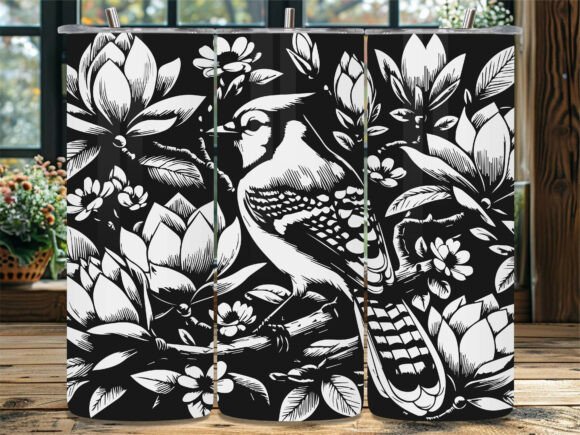
When you first open the file, the immediate feeling is one of elegance and nature-inspired charm. The composition balances the sharp, defined lines of the blue jay with the softer, organic curves of the surrounding floral elements. It creates a mood that is both sophisticated and welcoming. For a designer, this duality is crucial; it means the design can pivot between a high-end boutique look and a cozy, handmade aesthetic depending on the execution.
The layout feels intentional. There is no wasted space, yet the design breathes. The visual personality suggests a product that belongs in a curated shop rather than a mass-market discount bin. It screams "personalized gift" before a single stitch is made. Whether you are creating a holiday ornament or a custom apron, this design has the presence to elevate the perceived value of the finished product.
Real-World Application: From Screen to Stitch
I recently tested a similar concept by preparing a custom embroidered tote bag for a local craft fair. If I were to apply Floral Blue Jay to that project, here is what I envision. The design would likely shine on a canvas tote, where the sturdy fabric provides enough stability to support the detail without puckering. Imagine a deep navy tote with the blue jay rendered in varying shades of royal and sky blue threads, accented by cream and sage greens for the flowers. The contrast would be striking against the dark background, making the bird pop while the florals blend softly into the texture.
This same design could also find a home on a sweatshirt or a heavy cotton shirt. The full-wrap nature of the original file suggests a large, impactful image, which works well for back-of-shirt placements or centered chest designs on hoodies. For a small business owner selling handmade products, this design offers versatility. It fits perfectly into the "custom apparel" niche, allowing sellers to offer personalized gifts for birthdays, weddings, or corporate events.
However, I must address the primary classification of this asset. The product description explicitly states it is designed for Laser Tumbler Wrap and includes files like SVG, EPS, PDF, and PNG for laser engraving. While many designers hope to repurpose vector files for machine embroidery, there is a significant technical gap between a laser-ready graphic and a functional embroidery file. Laser files define shapes for cutting or burning, whereas machine embroidery requires specific stitch data—satins, fills, and running stitches—to create texture and dimension.
Technical Considerations for Embroidery Projects
If you are planning to use Floral Blue Jay for a machine embroidery project, you need to understand the limitations. Since the provided assets are described as digital embroidery file formats suitable for laser engraving, they may not contain the necessary stitch instructions for a sewing machine. Using a laser vector directly in an embroidery hoop often results in a flat, untextured appearance that lacks the tactile quality customers expect from handmade product lines.
To make this work for embroidery, you would likely need to trace the design within your digitizing software to create a true machine embroidery design. During this process, you must carefully consider the stitch density. The floral details in Floral Blue Jay appear delicate. If the fill stitch density is too high, the fabric might pucker, especially on thin materials. Conversely, if the density is too low, the colors might bleed through, ruining the crispness of the blue jay's feathers.
Hoop size is another critical factor. Large, detailed designs require larger hoops to ensure the stabilizer holds the fabric taut. If you attempt to stitch this on a small hoop, you risk distortion. Additionally, the stabilizer choice becomes paramount. For a design of this complexity, a cut-away stabilizer is usually recommended to provide long-term support, preventing the stitches from pulling the fabric over time.
Where to Exercise Caution
Not every surface is suitable for this level of detail. I would advise against using Floral Blue Jay on stretchy fabrics like jersey knit unless you have advanced stabilization skills. The tension required to hold such a detailed image could cause the fabric to warp. Similarly, textured fabrics like chunky knits or heavy denim might hide the finer points of the floral arrangement, diminishing the visual appeal.
Small items present their own challenges. Attempting to fit this design onto a tiny embroidered patch or a baby bib might result in overcrowding. The fine lines of the bird's crest or the petals could merge together during stitching, losing definition. In these cases, simplifying the design or reducing the scale is essential. Furthermore, on dark fabrics, the thread color contrast must be meticulously planned. Without proper underlay stitching, the colors might not cover the base fabric effectively, leading to a muddy appearance.
Impact on Brand and Customer Trust
In the world of Etsy sellers and craft business owners, presentation is everything. A design like Floral Blue Jay, when executed correctly, signals professionalism. It shows that the maker cares about aesthetics and detail. Customers are more likely to trust a brand that uses high-quality, cohesive designs. When a buyer sees a beautifully stitched blue jay on a tea towel or a pillow cover, they associate that quality with the entire brand.
This design also enhances giftability. The imagery is universally appealing and works well for various occasions, from spring holidays to summer gatherings. By incorporating this into your small shop product line, you increase the chances of repeat sales. However, remember that the finished product relies heavily on the execution. If the stitching is sloppy or the colors clash, the design's potential is wasted.
Practical Designer Notes Before You Start
Before committing to a production run, I strongly recommend testing the design on scrap fabric first. This step is non-negotiable for any serious embroidery project. Check the thread colors to ensure they match your vision. Review the stitch density to prevent puckering. Confirm that your hoop size accommodates the full design without cutting off edges.
If you are converting the laser file for embroidery, inspect the small details closely. Ensure that corners are clean and that the transition between the bird and the flowers is smooth. Test the design in black and white mockups to verify the contrast and balance. Compare how it looks on light versus dark fabric backgrounds. Always use the proper stabilizer for your specific fabric type.
Finally, confirm licensing terms. Just because you own the graphics does not automatically grant commercial rights to sell finished items. Verify whether the license allows for commercial embroidery projects. If you are unsure about the file format compatibility, reach out to the creator or consult the documentation. Do not assume that a SVG or PNG file is ready for immediate machine stitching without conversion.
Floral Blue Jay is a stunning asset that brings a touch of nature and artistry to any project. Whether you are designing a tote bag design, a sweatshirt embroidery piece, or a holiday embroidery gift, this design offers a strong foundation. With careful planning and attention to the technical nuances of digitizing and stitching, it can become a standout item in your portfolio. Use it wisely, test thoroughly, and watch your creations come to life.