Floral Cow Continuous Line Art Review
As a designer who has stitched hundreds of custom pieces for clients and sold countless designs on marketplaces, I know that the difference between a good embroidery file and a great one often comes down to how it translates from screen to fabric. When I first encountered Floral Cow Continuous Line Art, my initial reaction was a mix of curiosity and skepticism. The concept of a continuous line drawing is trendy in digital graphics, but does it hold up when rendered with thread? After running several test stitches and imagining this design on various finished products, I have formed a clear opinion on where this piece fits in a professional workflow.
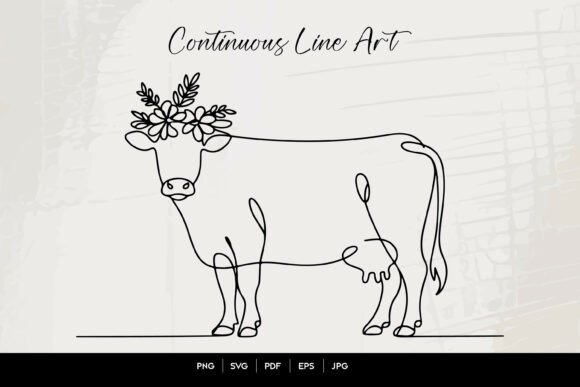
The visual personality of Floral Cow Continuous Line Art is undeniably whimsical yet grounded. It captures the essence of rural life without feeling cluttered or overly detailed. The single-line approach suggests a sense of movement and fluidity that can be very appealing on soft goods like tote bags or aprons. However, the floral elements woven into the cow's silhouette add a layer of complexity that requires careful planning. This isn't just a simple outline; it is a machine embroidery design that demands respect for stitch density and thread tension.
From Digital File to Finished Product
I recently considered using Floral Cow Continuous Line Art for a specific client project: a boutique brand launching a line of organic dairy products. They wanted embroidered patches for their packaging and matching tea towels for their gift sets. My goal was to create a cohesive look that felt handmade but maintained high professionalism. The continuous line style offered a modern, artistic edge that would stand out against the rustic kraft paper of their boxes.
In this scenario, the design had to work well as an embroidered patch. The continuous nature of the lines means there are fewer jump stitches, which can reduce bulk and make the final product feel more integrated with the fabric. When I mocked up the design on a cotton canvas tea towel, the flow of the line created a lovely focal point. The floral accents broke up the solid shape of the bovine figure, adding texture without overwhelming the viewer. For a small shop owner looking to elevate their handmade product, this kind of detail adds perceived value.
However, translating this into a real-world application required some adjustments. If you plan to use this for custom apparel like a sweatshirt or a baby onesie, the scale matters immensely. A design that looks perfect on a large apron might lose its definition on a small hat or a child's shirt. The continuous line technique relies on clean edges; if the stitch density is too low, the line will look jagged. If it is too high, the fabric may pucker, ruining the delicate aesthetic of the artwork.
Navigating Fabric and Technique Challenges
Not every surface is suitable for Floral Cow Continuous Line Art. While it shines on stable fabrics like denim, canvas, or heavy cotton, it presents challenges on stretchy materials. I advise against placing this design on thin jersey knits or highly textured fleece unless you are using a heavy-duty stabilizer. The continuous lines need a firm foundation to maintain their integrity. On a cap, for instance, the curved surface can distort the geometry of the cow's head, making the floral wreath appear misaligned.
Color selection is another critical factor. The elegance of a single-line drawing depends heavily on contrast. Using a light thread on a dark background can make the fine details disappear, while a dark thread on white fabric ensures clarity. For commercial embroidery projects where consistency is key, testing your thread colors against your actual fabric swatch is non-negotiable. You want to ensure that the floral details remain distinct and do not blend into the negative space.
There are also limitations regarding the hoop size. Because the design features intricate curves and potential loops within the continuous line, extremely small hoops might force the machine to cut corners or skip stitches. If you are producing embroidery files for mass production, you must verify that your machine can handle the specific pathing of the design. Some machines struggle with tight turns in continuous line patterns, leading to thread breaks or uneven tension.
Practical Tips for Designers and Sellers
If you are a craft business owner or an Etsy seller considering this asset, here are some practical steps to ensure success before you start stitching:
- Test on scrap fabric: Always run a test stitch on a piece of the same material you intend to use. Check for puckering, especially around the floral sections where the line density might increase.
- Review stitch density: Look closely at the running stitch areas versus any satin stitch fills. Ensure the density is balanced so the design doesn't look stiff or limp.
- Check file formats: The product includes PNG, SVG, EPS, PDF, and JPG. Use the vector files (SVG/EPS) for resizing and the embroidery-specific formats if provided. Verify the file type supports your machine software.
- Inspect small details: Zoom in on the floral wreath. Are the petals distinct enough to be recognized after stitching? If they are too tiny, consider simplifying the design or increasing the output size.
- Confirm licensing: Before selling finished items featuring Floral Cow Continuous Line Art, read the license terms carefully. Some designs allow commercial use on physical goods but restrict digital resale.
Visual Appeal and Brand Consistency
The ultimate test of any design asset is its ability to enhance brand identity. Floral Cow Continuous Line Art carries a specific mood: it is pastoral, gentle, and creative. It fits perfectly with brands focused on sustainability, farm-to-table concepts, or artisanal crafts. When used correctly, it signals to the customer that the maker cares about aesthetics and quality.
For holiday embroidery projects, such as Christmas stockings or Valentine's Day gifts, this design offers a unique twist. Instead of a generic heart or reindeer, the cow with flowers provides a conversation starter. It feels personal and thoughtful, which increases customer trust and engagement. Buyers are more likely to purchase a personalized gift that shows effort and artistic intent.
However, designers must be mindful of overuse. If every item in a shop features the same cow design, the collection can feel repetitive. Use this graphics element strategically as a signature mark or a featured accent rather than a default pattern. Pair it with complementary fonts and color palettes to create a cohesive design asset library.
Final Thoughts on Real-World Application
In conclusion, Floral Cow Continuous Line Art is a versatile tool for the modern crafter and designer. It bridges the gap between digital illustration and tactile craftsmanship effectively. Whether you are creating a tote bag design for a local market, adding a logo to a kitchen towel, or producing a batch of baby embroidery for a new parent, this design has the potential to deliver a polished result.
Just remember that the magic happens in the preparation. Take the time to adjust the stabilizer, choose the right fill stitch density, and test the finished product before sending it to a client. By approaching Floral Cow Continuous Line Art with a critical eye and a willingness to experiment, you can transform a simple line drawing into a standout piece of wearable art or home decor.
For those in the crafts and graphics industries, this design serves as a reminder that simplicity can be powerful. It invites the maker to focus on the nuances of thread and texture, resulting in a product that feels authentic and timeless.